
Importing home decor from China can offer attractive manufacturing prices, but the factory unit price is only one part of the total cost. For overseas brands, retailers, wholesalers, and e-commerce businesses, the actual import cost also includes packaging, tooling, sampling, inspection, testing, freight, customs, duties, warehousing, and potential costs caused by defective or non-compliant products.
This guide explains how to reduce the total cost of importing home decor from China without simply choosing the cheapest supplier. It covers supplier selection, product specifications, ODM and OEM sourcing, MOQ negotiation, packaging optimization, quality control, compliance, shipping, certifications, and practical cost-saving strategies.
The goal is simple: reduce landed cost while maintaining the product quality and compliance required by your target market.
What Home Decor Products Can You Import From China?
Chinese home decor manufacturers generally specialize in specific product categories. Selecting a supplier that already manufactures your product type can reduce development time, communication costs, sampling costs, and production risks. The reference guide identifies common categories including wall art, mirrors, ceramics, textiles, rugs, tabletop decor, artificial plants, and lighting.
Common home decor categories include:
- Wall art and canvas prints
- Decorative mirrors
- Vases and ceramic ornaments
- Cushions and throw pillows
- Curtains and drapes
- Rugs and carpets
- Decorative shelves and clocks
- Artificial flowers and plants
- Trays, bowls, and candlesticks
- Lamp shades and lighting fixtures
- Rattan baskets
- Seagrass baskets
- Water hyacinth products
- Woven storage products
- Wooden decorative accessories
- Natural-material home decor
For buyers importing natural-material products, selecting a manufacturer with established experience in the relevant material can be particularly important. A supplier specializing in woven rattan or seagrass products may already have the labor, material sourcing, weaving techniques, and quality-control procedures needed for that product category.
Understand Your Total Home Decor Import Cost
The first step in reducing import costs is to stop looking at the supplier’s unit price in isolation.
Your approximate landed cost can be considered as:
Product Cost + Packaging + Tooling + Testing + Inspection + Inland Freight + International Freight + Insurance + Duties + Customs Clearance + Local Delivery
For example, suppose a decorative basket has a factory price of $5.00.
That does not mean your actual import cost is $5.00.
You may also pay for:
- Custom packaging
- Product labels
- Inspection
- Testing
- Inland transportation
- Ocean freight
- Import duties
- Customs clearance
- Warehouse delivery
A supplier offering a $4.80 unit price may therefore be more expensive overall than a supplier offering $5.10 if the first supplier requires expensive packaging, has high defect rates, or uses inefficient carton packing.
This is why private-label brands and wholesale buyers should compare landed cost per sellable unit, not simply factory price.

10 Ways to Reduce Home Decor Import Costs From China
1. Choose the Right Manufacturing Region
China has several important manufacturing hubs for home decor. The reference guide identifies Guangdong, Guangxi, Zhejiang, Jiangsu, and Fujian as important manufacturing regions.
Different regions and factories tend to develop expertise in different product categories.
For example:
- Guangdong: broad home furnishing, ceramics, artificial plants, lighting, and related products
- Guangxi: natural-material and woven products
- Zhejiang: household goods and decorative products
- Jiangsu: textiles and household manufacturing
- Fujian: home accessories and export-oriented manufacturing
Choosing a manufacturer that is geographically and technically close to the relevant production cluster can reduce:
- Material sourcing costs
- Subcontracting
- Production coordination
- Domestic transportation
- Development time
However, geographic location should not be evaluated alone. A factory farther away may still offer a lower total cost if it has better production efficiency, packaging, MOQ, and quality performance.
2. Choose an Existing Product Before Developing a Completely New One
One of the simplest ways to reduce home decor sourcing costs is to avoid unnecessary product development.
If your business does not require a completely original product, consider an ODM/private-label model.
The reference guide explains that ODM products are factory-designed products that can be customized with options such as logos, packaging, and color matching.
Instead of creating a product from zero, you may select an existing factory product and customize:
- Brand logo
- Color
- Size
- Packaging
- Label
- Hang tag
- Minor design details
This can reduce:
- Engineering costs
- Tooling costs
- Sample-development costs
- Product-development time
- Minimum order risk
ODM is particularly useful for startups, small brands, and retailers testing a new product category.
3. Use OEM Only When Customization Creates Real Value
OEM manufacturing gives buyers greater control, but custom development usually requires more work.
The reference guide states that OEM manufacturers generally need a technical drawing or 3D file, detailed product specifications, and quantity and budget information before developing a product.
OEM can therefore introduce additional costs such as:
- Product development
- Engineering
- Tooling
- Mold development
- Custom materials
- Special finishes
- Sampling
- Testing
- Custom packaging
If a completely unique product is important to your brand, these costs may be justified.
If your main objective is to test market demand, an ODM product may provide a lower-risk starting point.
A useful question is:
Does this customization create enough commercial value to justify its additional cost?
If the answer is no, consider simplifying the design.
4. Reduce Product Complexity
Complexity is one of the hidden drivers of home decor manufacturing cost.
A product with:
- Multiple materials
- Several colors
- Numerous components
- Complicated assembly
- Hand-painted details
- Custom hardware
- Multiple finishing processes
will generally require more production steps than a simpler product.
For example, a decorative basket may become more expensive if it requires:
- A metal frame
- Multiple weaving materials
- Custom lining
- Leather handles
- Decorative hardware
- Custom painting
If the customer does not perceive meaningful additional value from these elements, simplify the product.
Cost-saving design principles
Consider:
- Fewer components
- Standard materials
- Standard hardware
- Standard colors
- Existing molds
- Simple packaging
- Efficient assembly
The objective is not to make the product look cheap.
The objective is to remove manufacturing complexity that does not contribute to customer value.
5. Optimize Product Specifications
An overly complicated specification can increase costs unnecessarily.
For each product, review:
Material
Can a standard material achieve the required appearance and performance?
Dimensions
Can the product be slightly resized to improve carton utilization?
Components
Can several small components be replaced with one standard component?
Finish
Can a standard finish replace a custom finish?
Packaging
Can the packaging protect the product without excessive material?
A good specification should define the quality required without specifying unnecessary complexity.
The reference guide recommends detailed specifications for custom products, including materials, dimensions, and finish.
The goal is therefore not to have fewer specifications.
It is to have clear specifications containing only commercially necessary requirements.
6. Increase Order Quantity Strategically
MOQ and volume have a major effect on home decor pricing.
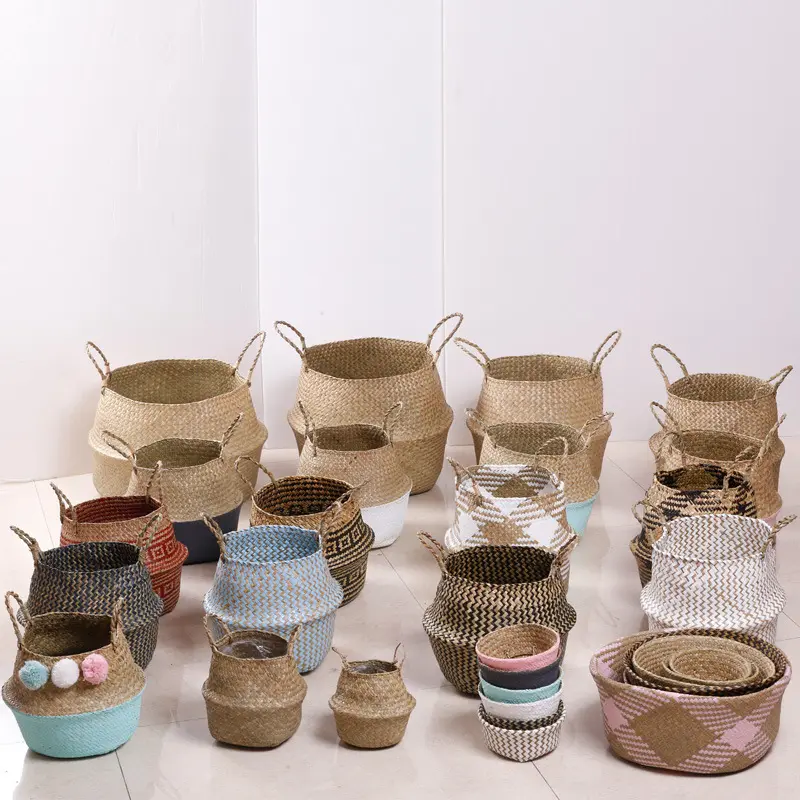
The reference guide states that many manufacturers require approximately 500–1,000 units per SKU or color, while some ODM products may be available at around 300 units. Orders below 100 units are uncommon except for samples.
Higher volumes can sometimes reduce unit costs because fixed production expenses are spread across more units.
However, ordering more products is not automatically cheaper.
You should compare:
Lower Unit Price vs. Higher Inventory Cost
For example:
| Order Quantity | Unit Price | Total Product Cost |
|---|---|---|
| 500 pcs | $8.50 | $4,250 |
| 1,000 pcs | $7.80 | $7,800 |
| 2,000 pcs | $7.20 | $14,400 |
The 2,000-piece order has the lowest unit price but requires substantially more working capital.
For products with uncertain demand, the optimal order quantity may therefore be lower than the quantity offering the lowest factory price.
7. Consolidate SKUs and Colors Carefully
Many private-label brands create too many variations too early.
For example, instead of:
- 5 colors
- 4 sizes
- 3 designs
you could launch with:
- 2 colors
- 2 sizes
- 2 designs
This reduces:
- SKU complexity
- MOQ exposure
- Packaging requirements
- Inventory requirements
- Quality-control complexity
It can also make purchasing and forecasting easier.
For some product categories, negotiating a combined quantity across colors or closely related SKUs can help reduce MOQ pressure, although this depends entirely on the manufacturer’s production setup.
Ask the supplier:
Can the total quantity be combined across colors or sizes for MOQ calculation?
8. Reduce Packaging Costs Without Increasing Damage
Packaging is an important but often overlooked part of import cost.
Excessive packaging can increase:
- Product cost
- Carton dimensions
- Shipping volume
- Warehousing requirements
- Waste
At the same time, insufficient packaging can increase breakage and returns.
The objective is to achieve the lowest cost per safely delivered unit.
For example, a fragile ceramic vase might require stronger protection than a woven basket.
Packaging should therefore be optimized according to the product’s actual risk.
Review:
- Inner packaging
- Carton dimensions
- Carton quantity
- Protective materials
- Pallet configuration
- Master carton strength
- Drop-test performance where relevant
Ask your supplier to provide carton dimensions and packing quantities before finalizing the order.
9. Improve Carton Utilization
International freight is strongly affected by shipment volume.
For many home decor products, especially lightweight but bulky products, the space they occupy can be more important than their actual weight.
Review:
- Product folding capability
- Nested packing
- Stackability
- Carton dimensions
- Carton quantity
- Pallet utilization
- Container loading
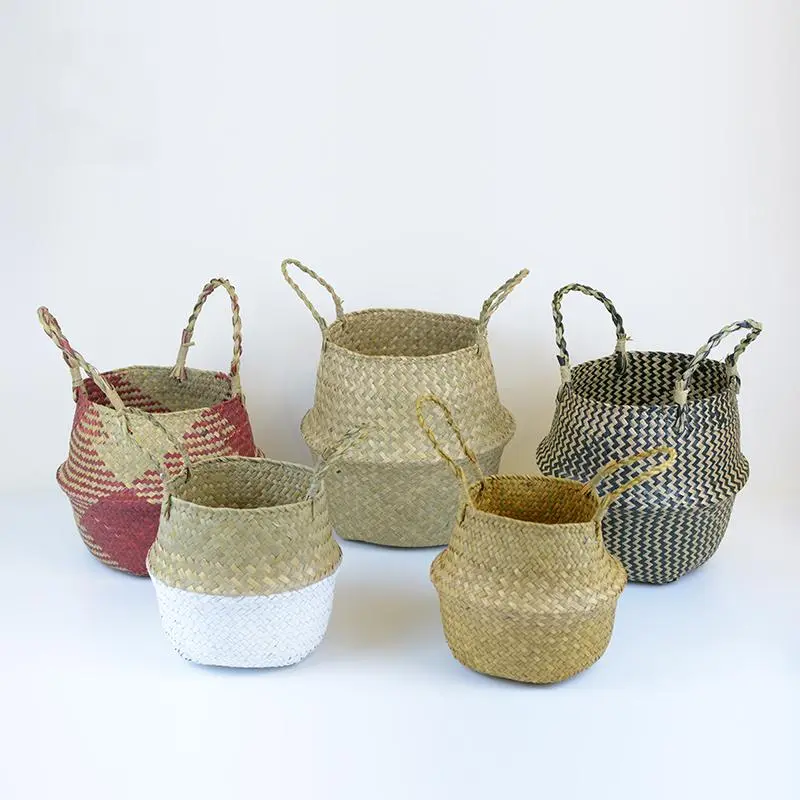
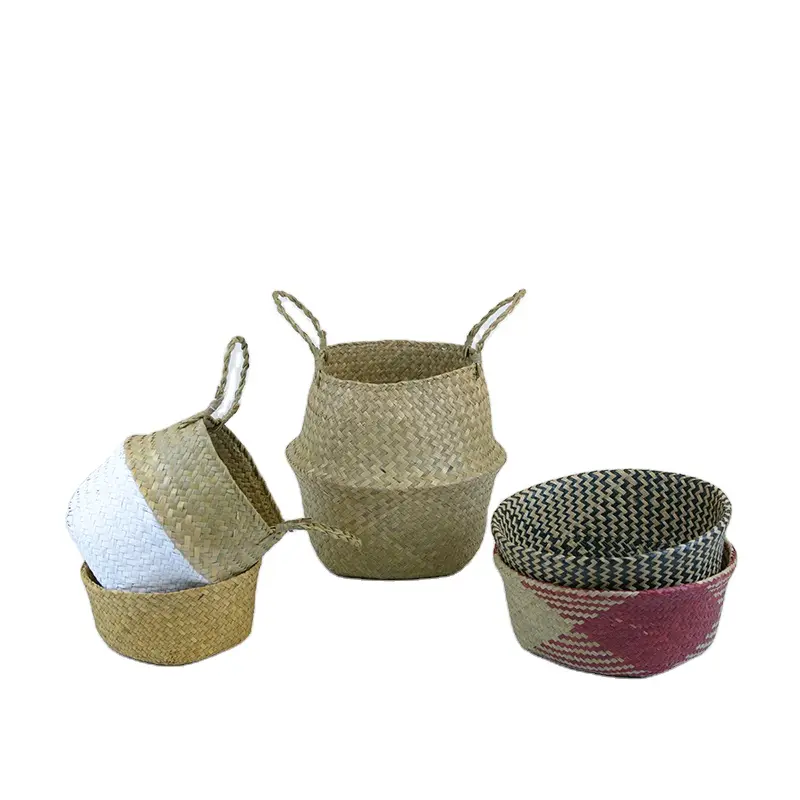
For example, baskets can sometimes be nested to reduce shipping volume.
Similarly, collapsible products may have a significantly lower transportation volume than rigid products of the same finished size.
Before production, ask:
How many units fit into one master carton?
Then calculate:
Total Shipment Volume = Carton Volume × Number of Cartons
A small improvement in carton utilization can produce meaningful savings over repeated shipments.
10. Compare Suppliers Using Total Cost, Not Unit Price
Alibaba.com and GlobalSources.com are major supplier directories, but supplier selection should go beyond price. The reference guide recommends evaluating product scope, compliance, quality management, social compliance, and whether the supplier is actually a manufacturer or a trader.
When comparing suppliers, build a cost comparison table:
| Cost Factor | Supplier A | Supplier B | Supplier C |
|---|---|---|---|
| Unit price | $5.20 | $5.00 | $5.40 |
| MOQ | 500 | 1,000 | 300 |
| Packaging | $0.50 | $0.80 | $0.40 |
| Sample | $60 | $40 | $50 |
| Tooling | $0 | $500 | $0 |
| Lead time | 35 days | 45 days | 30 days |
| Inspection support | Yes | Yes | Yes |
| Export experience | High | High | Medium |
Supplier B has the lowest product price but not necessarily the lowest overall sourcing cost.
A good procurement decision should compare the complete commercial picture.
How to Find Cost-Effective Home Decor Suppliers in China
Alibaba and Global Sources
When searching online, use specific product keywords rather than simply searching for “home decor.”
Examples include:
- Rattan basket manufacturer China
- Seagrass basket supplier China
- Woven home decor manufacturer
- OEM wall decor supplier China
- Ceramic vase manufacturer China
- Private label home decor supplier
- Home decor wholesale factory China
Then filter suppliers based on:
Product Scope
Does the supplier manufacture your product category?
Compliance
Can they provide applicable documentation such as REACH, RoHS where relevant, or FSC-related documentation?
Quality System
Do they have ISO 9001 or an equivalent quality-management system?
Social Compliance
Do they have BSCI or Sedex documentation if required by your customers?
Factory Status
Are they actually manufacturing the products, or subcontracting production?
The reference guide recommends narrowing a large supplier search to approximately 10–12 qualified manufacturers before deeper evaluation.
Request Comparable Quotations
One of the easiest ways to reduce sourcing costs is to make supplier quotations comparable.
Send the same RFQ to several qualified manufacturers.
Include:
- Product drawing
- Dimensions
- Materials
- Colors
- Finish
- Quantity
- Packaging
- Branding
- Target market
- Required testing
- Delivery location
Then ask each supplier to quote:
- Sample price
- Tooling cost
- Unit price
- Packaging cost
- MOQ
- Production lead time
- Payment terms
- Trade terms
- Carton dimensions
- Gross/net weight
This allows you to identify where cost differences actually come from.
Negotiate the Right Cost Variables
Price negotiation does not have to mean simply saying:
“Can you give me a lower price?”
Instead, negotiate specific cost drivers.
Ask:
Can the price decrease at a higher quantity?
For example:
- 500 pcs
- 1,000 pcs
- 2,000 pcs
- 5,000 pcs
Can packaging be simplified?
Can several colors share the same MOQ?
Can standard materials be used?
Can existing molds be used?
Can products be nested?
Can several SKUs be consolidated into one shipment?
Can the supplier offer a better price for repeat orders?
This approach makes negotiations more transparent and gives the manufacturer practical ways to reduce costs.
Sample Costs: Reduce Development Expense
Sampling is necessary for quality control, but repeated sampling can become expensive.
Reduce unnecessary sample costs by preparing a complete specification before requesting development.
Include:
- Dimensions
- Materials
- Color
- Finish
- Packaging
- Logo
- Construction
- Reference images
The better the initial specification, the fewer revisions may be necessary.
For OEM projects, the reference guide specifically recommends providing a 3D drawing or technical sketch and detailed product specifications.
For ODM products, ask whether the supplier can provide an existing sample rather than producing a completely new development sample.
Reduce Quality-Related Import Costs
Cheap products become expensive when they arrive with defects.
Potential hidden costs include:
- Rework
- Replacement goods
- Returns
- Customer refunds
- Re-shipping
- Negative reviews
- Warehouse labor
- Lost sales
The reference guide emphasizes compliance and quality evaluation when selecting suppliers.
For this reason, quality control should be viewed as a cost-control strategy, not simply an additional expense.
Use a Pre-Shipment Inspection
A pre-shipment inspection can identify problems before goods leave China.
Check:
- Quantity
- Dimensions
- Materials
- Color
- Finish
- Function
- Packaging
- Labels
- Carton markings
- Product defects
A basic inspection can be particularly valuable for a first order or a new supplier.
If the inspection identifies significant problems, correcting them before shipment is usually easier than dealing with defective inventory after arrival.
Avoid Compliance-Related Costs
Non-compliant goods can create much larger expenses than testing.
The reference guide states that importing non-compliant home decor can result in goods being seized or destroyed and emphasizes that requirements vary according to product materials and target market.
Relevant requirements can include:
- REACH
- GPSR
- US labeling requirements
- CPSIA where applicable
- Prop 65 where applicable
- Textile flammability requirements
- Food-contact requirements
- Electrical requirements
- FSC documentation
- Country-of-origin labeling
The buyer/importer should determine the applicable requirements rather than assuming that the Chinese manufacturer knows the destination-market rules.
The reference guide specifically notes that suppliers may not know how products should be labeled in other countries and that the importer is responsible for ensuring correct product and packaging labeling.
Don’t Over-Test Products
Testing can also become an unnecessary expense if it is not planned properly.
Before ordering laboratory tests, determine:
- Product category
- Material composition
- Target country
- Intended use
- Retail channel
- Applicable regulation
- Customer requirements
Then build a testing plan.
The reference guide identifies testing areas including CPSIA, California Proposition 65, EU REACH, and textile flammability requirements. It also notes that retailers and Amazon may require test reports.
The objective should be:
Test what is required and commercially useful—not everything imaginable.
Reduce Import Costs Through Product Compliance Planning
Compliance should be incorporated into product development.
For example, changing a material after production because it fails a chemical test can result in:
- New samples
- New production
- Scrapped materials
- Delayed shipments
- Additional testing
- Additional freight
Instead, review compliance before mass production.
For EU-bound products, chemical and product-safety requirements may be relevant.
For US-bound products, labeling, chemical restrictions, consumer-product requirements, and state-specific requirements may apply depending on the product.
For plant-based and wooden products, additional documentation or declarations may be required depending on the product and market. The reference guide specifically discusses EU timber requirements, REACH, and the US Lacey Act.
Understand Home Decor Unit Pricing
The reference guide provides illustrative home decor prices at an order volume of approximately 1,000 pieces:
- Polyester cushion cover: $1.20–$3.80
- 15 cm ceramic vase: $2.00–$6.00
- 30 × 40 cm wall art canvas: $3.50–$9.00
- Artificial orchid: $1.50–$5.00
- 30 cm round decorative mirror: $4.00–$12.00
These figures should be treated as illustrative reference prices rather than current market quotations.
Actual prices can vary substantially according to:
- Material
- Product size
- Design complexity
- Labor
- Order quantity
- Packaging
- Quality requirements
- Customization
- Factory location
- Exchange rates
- Commodity costs
A buyer should therefore request current quotations for the exact specification rather than relying on generic price ranges.
Reduce Freight Costs
International freight can represent a significant portion of the landed cost, especially for bulky home decor.
To reduce freight costs:
Consolidate Orders
Combine products from the same supplier where practical.
Consolidate Suppliers
If commercially and operationally appropriate, work with suppliers that can provide several related products.
Optimize Cartons
Reduce unused space.
Increase Container Utilization
Plan loading before production.
Use Appropriate Shipping Modes
Compare:
- Sea freight
- Air freight
- Express
- Rail where applicable
For larger home decor shipments, ocean freight is often more economical than air freight, but the correct choice depends on product volume, urgency, and destination.
Reduce Costs Through Shipment Consolidation
Suppose you purchase:
- 500 baskets
- 500 trays
- 500 planters
Instead of shipping them separately, investigate whether they can be consolidated into one shipment.
Potential benefits include:
- Better freight utilization
- Lower handling costs
- Fewer customs entries where appropriate
- Lower per-unit logistics costs
However, consolidation should only be used when it does not create additional complexity or delays that outweigh the savings.
Trade Terms and Import Costs
When comparing suppliers, make sure you understand what is included in the quoted price.
A quotation may be based on different trade terms.
For example:
- EXW
- FOB
- CIF
- DDP
Two suppliers may appear to have different prices simply because the quotations cover different parts of the logistics process.
Therefore, always compare quotations on an equivalent basis.
For example:
Supplier A: FOB $5.20
and
Supplier B: EXW $4.80
does not necessarily mean Supplier B is cheaper.
You need to add the relevant logistics costs before making the comparison.
Certifications and Sustainability
Certifications can sometimes increase sourcing costs, but they may also be necessary to access specific customers or markets.
The reference guide identifies:
FSC Certification
Relevant to applicable wooden products and sustainability claims. The guide notes that FSC certification may be commercially requested by retailers and EU buyers even when it is not legally mandatory in most markets.
REACH and SVHC
The reference guide states that REACH compliance is important for applicable products sold into the EU and that importer responsibility should be considered.
OEKO-TEX Standard 100
Relevant to textile-based home decor and useful where buyers require evidence relating to harmful substances.
Before paying for certification, determine whether it is:
- Legally required
- Required by your retailer
- Required by your marketplace
- Required by your customer
- Useful as a marketing claim
This prevents paying for certifications that provide little commercial value.
Visit Home Decor Trade Shows
Trade shows can reduce sourcing costs indirectly because they allow buyers to compare multiple manufacturers and products efficiently.
The reference guide identifies:
- Canton Fair Phase 2 — Guangzhou
- Jinhan Fair Phase 2 — Guangzhou
- Guangzhou Home Fair / CIFF
- Shenzhen International Household Items Fair
- Yiwu Fair
- Hong Kong Houseware Fair
At a trade show, compare:
- Product quality
- Factory capabilities
- Customization
- MOQ
- Packaging
- Materials
- Pricing
- Lead time
- Export experience
Seeing multiple suppliers at the same event can make supplier benchmarking much easier.
Build Long-Term Supplier Relationships
The lowest price for the first order is not always the lowest cost over the long term.
A stable supplier relationship can potentially improve:
- Product consistency
- Communication
- Sampling efficiency
- Repeat-order speed
- Packaging optimization
- Production planning
- Price negotiation
- Problem resolution
After several successful orders, discuss:
- Annual volume
- Forecasts
- Repeat-order pricing
- Material purchasing
- Packaging optimization
- Production scheduling
If a supplier understands your expected annual demand, they may be able to plan materials and production more efficiently.
Create a Home Decor Cost-Saving RFQ
A professional RFQ should request all information necessary to calculate landed cost.
Product Information
- Product name
- SKU
- Dimensions
- Materials
- Colors
- Finish
- Weight
Commercial Information
- MOQ
- Price at 500 pcs
- Price at 1,000 pcs
- Price at 2,000 pcs
- Sample cost
- Tooling cost
- Payment terms
- Lead time
Packaging Information
- Units per carton
- Carton dimensions
- Gross weight
- Net weight
- Packaging material
Compliance
- Available test reports
- Certifications
- Material declarations
- Labeling support
Logistics
- EXW price
- FOB price
- CIF price if available
- Port of loading
This allows you to compare suppliers on a much more accurate basis.

Common Mistakes That Increase Home Decor Import Costs
Mistake 1: Choosing the Cheapest Factory
A low unit price does not guarantee low landed cost.
Mistake 2: Ignoring Packaging Volume
Bulky packaging can significantly increase freight costs.
Mistake 3: Ordering Too Many SKUs
Too many variations can increase inventory and MOQ costs.
Mistake 4: Developing a Custom Product When an ODM Product Is Sufficient
Unnecessary development can add tooling, sampling, and engineering costs.
Mistake 5: Negotiating Only Unit Price
Ask about packaging, MOQ, tooling, carton utilization, and repeat-order pricing too.
Mistake 6: Skipping Quality Inspection
Defective goods can create much larger downstream costs.
Mistake 7: Testing Too Late
A failed compliance test after mass production can cause significant delays and rework.
Mistake 8: Comparing Different Trade Terms
Always compare EXW with EXW, FOB with FOB, or calculate the full landed cost.
Mistake 9: Ignoring MOQ
A low unit price at a high MOQ may create excessive inventory.
Mistake 10: Forgetting Importer Responsibilities
The buyer is responsible for ensuring the product meets applicable destination-market requirements.
Home Decor Import Cost Reduction Checklist
Before placing an order, review:
- Correct product category selected
- Qualified manufacturer identified
- Factory/trading status verified
- ODM vs. OEM decision made
- Product specification completed
- Unnecessary product complexity removed
- MOQ confirmed
- Volume pricing compared
- Packaging optimized
- Carton dimensions confirmed
- Container utilization calculated
- Sample approved
- Quality standard confirmed
- Inspection arranged
- Compliance requirements identified
- Required testing completed
- Labels reviewed
- Certifications verified
- Trade terms compared
- Freight quotation obtained
- Import duties estimated
- Landed cost calculated
- Supplier relationship strategy established
A Practical Home Decor Import Cost Reduction Workflow
A repeatable sourcing process can be organized as follows:
1. Define the product
↓
2. Determine ODM or OEM
↓
3. Prepare product specifications
↓
4. Identify 10–12 qualified suppliers
↓
5. Request comparable quotations
↓
6. Compare total landed cost
↓
7. Negotiate MOQ, packaging, and volume pricing
↓
8. Order samples
↓
9. Confirm compliance requirements
↓
10. Approve the final sample
↓
11. Place production order
↓
12. Conduct pre-shipment inspection
↓
13. Optimize container/carton loading
↓
14. Ship and clear customs
↓
15. Calculate actual landed cost
↓
16. Review supplier performance for the next order
This process turns cost reduction into an ongoing procurement system rather than a one-time price negotiation.
FAQ About Reducing Home Decor Import Costs From China
What is the most effective way to reduce home decor import costs from China?
Start by calculating the complete landed cost rather than focusing only on factory price. Then optimize product specifications, MOQ, packaging, carton utilization, quality control, freight, and compliance.
Is the cheapest Chinese home decor supplier always the best option?
No. A lower factory price can be offset by higher packaging costs, poor quality, expensive freight, high MOQ, longer lead times, or compliance problems.
How can I reduce the MOQ for home decor products?
Ask whether the supplier can combine quantities across colors or related SKUs, use existing ODM products, use standard materials, or offer a smaller trial order. The reference guide indicates that typical home decor MOQ can be around 500–1,000 units per SKU/color, although actual requirements vary.
Is ODM cheaper than OEM home decor?
ODM can reduce development costs because the product is based on an existing factory design. OEM can be more expensive because it may require custom development, tooling, materials, sampling, and testing.
How can I reduce home decor shipping costs?
Optimize carton dimensions, use nesting or collapsible designs where appropriate, consolidate shipments, improve container utilization, and compare appropriate shipping methods.
Should I choose FOB or EXW?
Neither is automatically cheaper. Compare the complete cost from the factory to your warehouse, including domestic transportation, export handling, freight, insurance, customs, duties, and local delivery.
How can packaging reduce import costs?
Efficient packaging can reduce product damage while minimizing carton volume and material usage. Ask suppliers for carton dimensions, units per carton, gross weight, and net weight before placing the order.
Do I need to test home decor products imported from China?
Testing depends on the product, materials, destination market, intended use, and applicable regulations. The reference guide recommends testing imported home decor, particularly for relevant US and EU requirements and when retailers or marketplaces request test reports.
Can buying larger quantities reduce the unit price?
Often, suppliers offer better unit pricing at higher volumes, but the buyer should compare the savings against inventory, cash-flow, storage, and demand risks.
What is landed cost?
Landed cost is the total cost of getting a product from the manufacturer to the buyer’s intended destination, including relevant product, packaging, logistics, duties, customs, testing, and other import-related costs.
Conclusion
Reducing the cost of importing home decor from China is not simply about negotiating a lower factory price.
The biggest opportunities often come from choosing the right supplier, simplifying unnecessary product complexity, selecting ODM when appropriate, optimizing MOQ, improving packaging, reducing shipping volume, preventing quality problems, planning compliance early, and calculating the true landed cost.
A supplier offering a slightly higher unit price can sometimes produce a lower overall import cost when its products have better quality, optimized packaging, lower defect rates, efficient carton packing, and reliable production.
For home decor brands, retailers, wholesalers, and e-commerce businesses, the most sustainable approach is to build a repeatable sourcing process that evaluates every major cost component from product design to final delivery.
The goal should not simply be:
“Find the cheapest supplier.”
The better procurement objective is:
“Find the supplier and product configuration that delivers the required quality at the lowest sustainable landed cost.”