Launching a private-label home decor brand requires more than finding a factory with attractive products. You need a manufacturing partner that can translate your designs into consistent products, meet your target specifications, support the required order volume, provide appropriate documentation, and manufacture products suitable for your target market.
For many brands, OEM home decor manufacturing in China is a practical sourcing model because Chinese suppliers cover a broad range of home decor categories, including woven products, wall art, textiles, ceramics, mirrors, lighting, wooden products, and decorative accessories.
This guide explains how private-label brands can source OEM home decor from China, prepare product specifications, select manufacturers, manage samples and MOQ, protect designs, control quality, handle compliance, and move from a product concept to commercial production.
What Is OEM Home Decor Manufacturing?
OEM home decor manufacturing means a manufacturer produces a home decor product according to the buyer’s own design, specifications, materials, dimensions, finishes, packaging requirements, and branding.
In the source guide, OEM manufacturing is distinguished from ODM manufacturing. ODM products are factory-designed products that buyers can often customize with elements such as colors, packaging, or logos. OEM manufacturing is based on the buyer’s design and technical requirements.
For private-label brands, an OEM project may involve:
- Original product drawings
- Product dimensions
- Material specifications
- Color references
- Surface finishes
- Logo placement
- Brand packaging
- Product labels
- Assembly requirements
- Quality standards
- Target quantity
- Delivery requirements
OEM is therefore particularly relevant when a brand wants greater control over the final product rather than simply selecting an existing catalog item.
OEM vs. ODM for Private Label Home Decor
Before contacting manufacturers, decide whether you actually need OEM manufacturing.
| Factor | ODM Home Decor | OEM Home Decor |
|---|---|---|
| Product concept | Factory-designed | Buyer-designed |
| Customization | Usually limited to selected options | Based on buyer specifications |
| Design work | Primarily from supplier | Primarily from buyer |
| Development complexity | Lower | Higher |
| Product differentiation | Moderate | Potentially higher |
| Typical use | Fast private-label launch | Custom/private-label product development |
| Required documents | Product specifications | Drawings, specifications, BOM, packaging files |
| Development communication | Relatively simple | More detailed |
ODM can be useful when a private-label brand wants to launch quickly using an existing product platform. OEM is more appropriate when the brand already has a specific product concept or wants a manufacturer to reproduce a defined design.
The source guide notes that OEM manufacturers generally expect buyers to provide a 3D drawing or technical sketch, detailed product specifications, and an indication of quantity and budget.
What Home Decor Products Can Be Manufactured Under OEM?
Chinese home decor manufacturers tend to specialize in particular product categories. Private-label brands should therefore search for manufacturers with direct experience in the exact product type they intend to sell rather than choosing a supplier simply because it lists “home decor” as a broad category.
Common OEM home decor categories include:
1. Woven and Natural-Fiber Home Decor
Examples include:
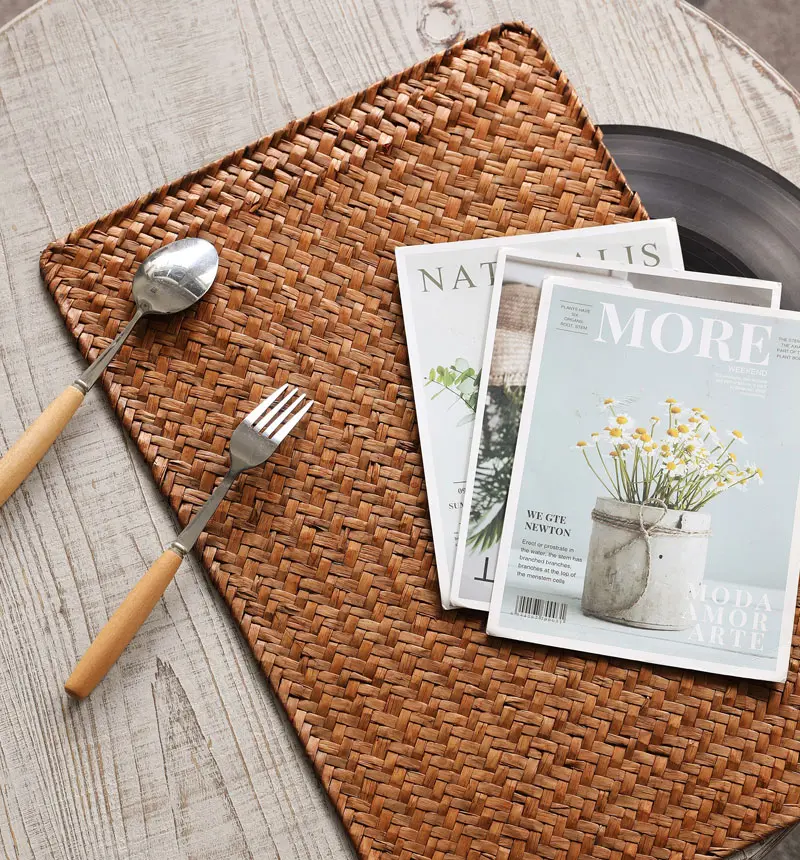
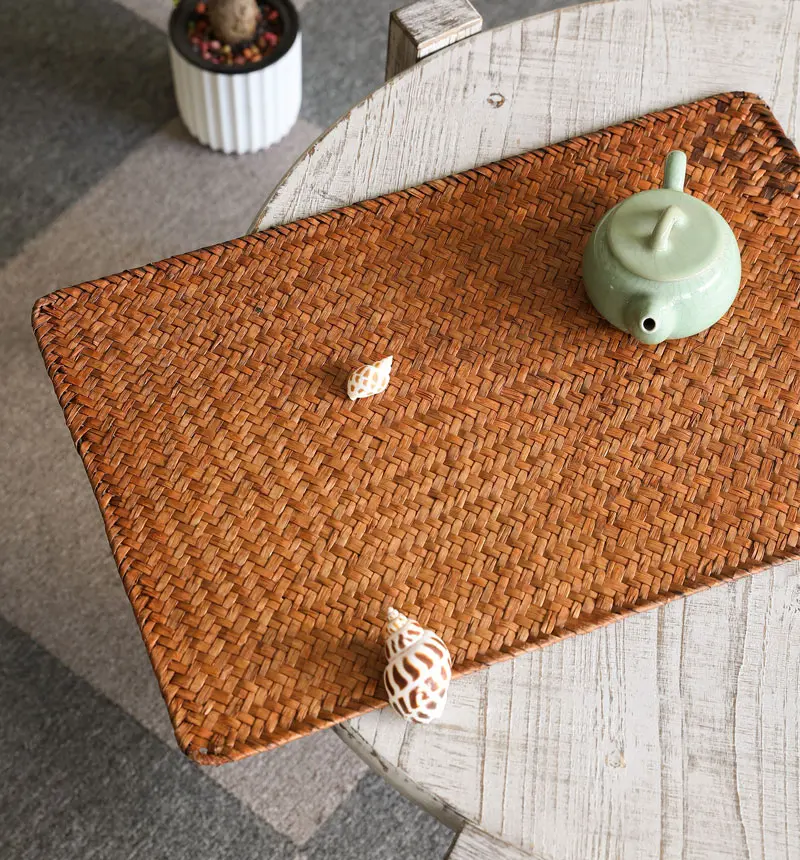
- Rattan baskets
- Seagrass baskets
- Water hyacinth baskets
- Woven storage baskets
- Woven trays
- Rattan lamps
- Rattan pendant lights
- Seagrass planters
- Woven wall decor
- Natural-fiber table accessories
These products may require specifications covering material type, weaving pattern, dimensions, color, moisture content, structural strength, handles, lining, and finishing.
2. Wall Art and Decorative Accessories
OEM manufacturers may produce:
- Canvas wall art
- Framed artwork
- Decorative wall panels
- Wooden wall decor
- Decorative mirrors
- Metal wall art
- Woven wall hangings
3. Textile Home Decor
Examples include:
- Cushion covers
- Throw pillows
- Curtains
- Table runners
- Placemats
- Decorative textiles
- Rugs
4. Ceramic and Glass Decor
Potential OEM products include:
- Decorative vases
- Ceramic ornaments
- Decorative bowls
- Candle holders
- Ceramic planters
- Glass decorative accessories
5. Wood and Plant-Based Products
Examples include:
- Wooden boxes
- Wooden trays
- Decorative frames
- Storage products
- Natural-material accessories
6. Lighting and Decorative Fixtures
Depending on the manufacturer’s capabilities, private-label brands can source:
- Rattan pendant lamps
- Woven lamp shades
- Decorative lamps
- Natural-material lighting
- Decorative lighting accessories
For products containing electrical components, the compliance requirements can be substantially different from those for non-electrical decor.
Why Private Label Brands Use Chinese OEM Manufacturers
China has established manufacturing clusters for many home decor categories. The source guide identifies major manufacturing regions including Guangdong, Guangxi, Zhejiang, Jiangsu, and Fujian, with manufacturers specializing in different product categories.
For private-label brands, the potential benefits of working directly with an OEM manufacturer include:
Product Customization
A brand can specify materials, dimensions, finishes, colors, construction methods, and packaging rather than selecting only from a standard catalog.
Production Scalability
Once the product has passed sampling and approval, the manufacturer can produce larger quantities according to the agreed specifications.
Brand Integration
OEM production can incorporate:
- Brand logos
- Custom packaging
- Product labels
- Hang tags
- Instruction cards
- Retail packaging
- Custom colorways
Product Development
A capable manufacturer may also help convert a design concept into a manufacturable product by identifying production limitations, material alternatives, or construction considerations.
However, buyers should distinguish between manufacturing capability and product-development capability. An OEM factory may be capable of producing a design without being responsible for developing the design itself.
How to Prepare an OEM Home Decor Product Specification
One of the most important steps in OEM sourcing is preparing a clear product specification.
A manufacturer cannot accurately quote or produce a product if the requirements are vague.
Your specification should ideally include:
Product Information
- Product name
- SKU
- Product category
- Intended application
- Target market
Dimensions
Specify:
- Length
- Width
- Height
- Diameter
- Thickness
- Handle dimensions where applicable
- Folded dimensions where applicable
Include acceptable tolerances where necessary.
Materials
Specify the exact material wherever possible.
For example:
Instead of:
Natural basket
Use:
Natural seagrass outer construction with specified internal support structure and defined color/finish.
The more precise the material specification, the easier it becomes to compare quotations and inspect production.
Color
Provide:
- Pantone reference where applicable
- Color sample
- Finish reference
- Surface treatment
- Gloss/matte requirement
Construction
Explain how the product should be assembled or woven.
For woven products, specifications may include:
- Weaving pattern
- Weave density
- Edge finishing
- Handle construction
- Reinforcement
- Inner lining
- Frame material
Packaging
Specify:
- Individual packaging
- Polybag or paper wrapping
- Inner box
- Master carton
- Carton dimensions
- Carton quantity
- Barcode
- Retail label
- Shipping marks
Branding
Include:
- Logo artwork
- Logo dimensions
- Logo position
- Printing method
- Label artwork
- Hang-tag design
- Packaging artwork
What Documents Should You Give an OEM Manufacturer?
For custom home decor projects, the manufacturer may need several files before production can begin.
A typical OEM package may contain:
- Product drawing
- 3D model
- Technical specification
- Bill of Materials
- Color references
- Packaging specification
- Logo artwork
- Label artwork
- Quality standards
- Inspection checklist
- Approved sample photographs
- Compliance requirements
The source guide specifically notes that OEM manufacturers may require a 3D drawing or technical sketch, detailed product specifications, and quantity/budget information before responding to a custom project.
For private-label brands, it is useful to create a standardized OEM RFQ package that can be sent to multiple manufacturers. This makes supplier quotations easier to compare.
How to Find OEM Home Decor Manufacturers in China
Several sourcing channels can be used to identify manufacturers.
Alibaba and Global Sources
The reference guide identifies Alibaba.com and GlobalSources.com as major supplier directories for China-based export manufacturers.
When searching, avoid using only broad keywords such as:
Home decor manufacturer China
Instead, search by product and manufacturing capability.
Examples:
- OEM rattan basket manufacturer China
- OEM seagrass basket supplier China
- Custom woven home decor manufacturer
- OEM wall decor manufacturer China
- Private label home decor manufacturer
- Custom rattan lighting manufacturer
- OEM decorative basket factory
Specific searches generally make it easier to identify suppliers with relevant production experience.
Trade Shows
The source guide identifies several Chinese home decor and houseware trade shows, including:
- Canton Fair Phase 2
- Jinhan Fair Phase 2
- Guangzhou Home Fair / CIFF
- Shenzhen International Household Items Fair
- Yiwu Fair
- Hong Kong Houseware Fair
Trade shows can be useful because buyers can inspect samples, compare product ranges, discuss customization, and meet suppliers directly.
How to Evaluate an OEM Home Decor Manufacturer
A professional-looking website or large product catalog does not automatically demonstrate OEM capability.
Evaluate suppliers across several dimensions.
1. Product Scope
Does the manufacturer actually specialize in your product?
A supplier producing ceramic vases may not be the right supplier for rattan baskets. A woven-product manufacturer may be much better suited to natural-fiber products.
2. Factory or Trading Company
Determine whether the supplier:
- Manufactures directly
- Uses subcontractors
- Operates multiple production facilities
- Combines factory and trading functions
The source guide specifically recommends determining whether a supplier is genuinely manufacturing the products or subcontracting production.
3. OEM Experience
Ask for examples of:
- Custom products
- Private-label products
- Custom packaging
- Custom molds
- Custom color development
- Custom materials
- Previous export markets
4. Quality Management
Ask whether the manufacturer has relevant quality-management systems such as ISO 9001.
The source guide also recommends checking social-compliance credentials such as BSCI or Sedex where relevant.
5. Export Experience
Ask:
- Which markets do you export to?
- Which product categories do you export?
- Can you provide relevant compliance documentation?
- Have you supplied similar private-label products?
Experience with the destination market can reduce communication and compliance problems.
OEM Home Decor Sampling Process
Never treat a quotation as the final product.
For a custom project, sampling should normally follow a structured sequence.
Step 1: Send the RFQ
Provide:
- Drawings
- Specifications
- Target quantity
- Packaging requirements
- Target market
- Branding requirements
Step 2: Receive the Quotation
Compare:
- Unit price
- Sample cost
- Tooling cost
- MOQ
- Packaging cost
- Lead time
- Payment terms
- Shipping terms
Step 3: Develop the Prototype
The manufacturer creates the first sample according to the specifications.
Step 4: Review the Sample
Check:
- Dimensions
- Materials
- Color
- Construction
- Finish
- Function
- Branding
- Packaging
Step 5: Make Corrections
Send precise revision instructions.
Avoid vague feedback such as:
“Please make it better.”
Instead:
“Increase the basket height by 20 mm and change the handle diameter from 8 mm to 10 mm.”
Step 6: Approve the Golden Sample
Keep an approved sample as the physical production reference.
This sample can later be used during quality inspection.
MOQ for OEM Home Decor Manufacturing
MOQ is one of the most important commercial factors for private-label brands.
The source guide states that many home decor manufacturers require approximately 500–1,000 units per SKU or color, while some ODM products may be available at around 300 units. Orders below 100 units are described as uncommon except for samples.
OEM products may have different MOQ requirements because custom production can involve:
- Special materials
- Custom packaging
- New tooling
- New colors
- Custom molds
- Special labels
- Production setup costs
For example, a manufacturer may quote:
| Cost Item | Example |
|---|---|
| Sample | $50 |
| Tooling/setup | $200 |
| MOQ | 500 pcs |
| Unit price | $8.50 |
| Custom packaging | $0.60/pc |
| Lead time | 30–45 days |
These figures are illustrative only. Actual OEM pricing depends on product design, material, order volume, packaging, labor, tooling, and other commercial conditions.
How to Calculate the True Cost of OEM Home Decor
Do not compare factories using unit price alone.
Your landed cost may include:
Product Cost + Packaging + Tooling + Inspection + Testing + Freight + Duties + Customs + Local Delivery
For example, a $5 product does not necessarily mean your landed cost is $5.
Consider:
- Product price
- Custom packaging
- Sampling
- Testing
- Inspection
- Inland transportation
- Ocean or air freight
- Import duty
- Customs clearance
- Warehouse delivery
For private-label brands, gross margin calculations should be based on landed cost, not just the manufacturer’s quotation.
Quality Control for Private Label Home Decor
OEM production requires a clearly defined quality standard.
Your QC checklist can cover:
Appearance
- Color consistency
- Surface finish
- Weaving consistency
- Scratches
- Stains
- Glue marks
- Paint defects
Dimensions
Verify key dimensions against the approved specification.
Materials
Confirm that the correct materials and components were used.
Construction
Check:
- Joints
- Handles
- Stitching
- Weaving
- Fasteners
- Structural strength
Packaging
Inspect:
- Carton quality
- Inner protection
- Labels
- Barcodes
- Shipping marks
Quantity
Confirm production quantity before shipment.
For OEM products, the approved sample and specification should form the basis of the inspection standard.
Product Compliance and Labeling
Compliance depends on the product, materials, and destination market.
The reference guide identifies several important areas for home decor imports.
Wooden and Plant-Based Decor
The source document discusses EU requirements relating to timber and chemical substances and US requirements involving the Lacey Act for applicable plant-based products.
For natural-material products, buyers should identify the botanical material, origin information, and applicable import requirements before production.
Textile Home Decor
For textile products, the source guide identifies US flammability and care-labeling requirements and EU REACH/general product-safety considerations.
Ceramics and Glass
If a decorative product is intended for food contact, additional requirements may apply.
The source guide specifically mentions US FDA requirements and EU food-contact rules for relevant products.
Electrical Decor
Products containing electrical components may require additional requirements, markings, and documentation.
Labeling
Depending on the destination market and product type, labeling can include:
- Country of origin
- Material composition
- Fiber content
- Care instructions
- Safety warnings
- Product identification
- Importer information
- Electrical markings where applicable
The source guide emphasizes that the importer is responsible for ensuring products and packaging are correctly labeled for the destination market.
Testing and Documentation
Laboratory testing can be an important part of private-label home decor sourcing.
The source guide identifies examples such as:
- US CPSIA testing
- California Proposition 65
- EU REACH
- Textile flammability testing
- Heavy-metal testing
- Formaldehyde testing
It also lists possible documentation such as:
- Declaration of Conformity
- Bill of Materials
- Test reports
- FSC chain-of-custody documentation
The exact testing program should be determined according to the product and destination market.
Do not assume that a factory’s existing test report automatically covers your exact SKU, material, formulation, or production batch.
Sustainability Certifications for Private Label Brands
Sustainability requirements increasingly influence home decor sourcing.
The reference guide identifies several certifications or standards that may be relevant:
FSC
Relevant to applicable wood-based products and responsible forestry claims.
REACH / SVHC
Relevant to chemical-substance compliance for applicable products sold in the EU.
OEKO-TEX Standard 100
Relevant to textile-based home decor where buyers require verification relating to harmful substances.
The source guide notes that some certifications are not universally legally mandatory but may be commercially requested by retailers or buyers.
Private-label brands should therefore distinguish between:
Legal requirement
and
Customer or retailer requirement.
These are not necessarily the same thing.
Protecting Your Private Label Design
OEM manufacturing creates an additional issue: intellectual property.
Before sharing a complete design package, establish:
- Who owns the design
- Who owns tooling
- Whether the manufacturer may reproduce the product
- Whether the manufacturer may sell the product to other customers
- Whether your packaging design remains exclusive
- How molds and tooling are stored
- What happens when the relationship ends
The source guide notes that suppliers may be reluctant to share their own design drawings and BOMs for ODM products because these can constitute supplier intellectual property.
For OEM projects, the opposite question is important:
Which parts of the product are owned by the buyer, and which belong to the manufacturer?
Document this clearly before production.
OEM Home Decor Packaging for Private Label Brands
Packaging is part of the product experience.
For retail brands, packaging may need to support:
- Brand recognition
- Product protection
- Shelf presentation
- E-commerce shipping
- Barcode scanning
- Customer instructions
- Sustainability requirements
A packaging specification should include:
- Box dimensions
- Material
- Printing
- Logo
- Color
- Inserts
- Product protection
- Barcode
- Country of origin
- Warning labels
- Shipping marks
For fragile products such as ceramics, mirrors, glass, and lighting, packaging engineering can have a significant effect on damage rates.
Common OEM Home Decor Sourcing Mistakes
Mistake 1: Choosing a Supplier Only by Price
The lowest quotation may not provide the required quality, consistency, packaging, or compliance documentation.
Mistake 2: Sending an Incomplete Specification
If the manufacturer does not know the exact dimensions, materials, finish, and packaging requirements, different suppliers may quote different products.
Mistake 3: Skipping the Sample
A production order should not normally be approved based only on photographs.
Mistake 4: Ignoring MOQ
Custom colors, materials, packaging, and tooling can increase MOQ requirements.
Mistake 5: Treating ODM and OEM as the Same
ODM starts with an existing supplier design. OEM starts with the buyer’s defined product requirements.
Mistake 6: Checking Compliance Too Late
Compliance should be considered before production rather than after the goods have already been manufactured.
Mistake 7: Comparing Only Unit Price
Landed cost is more useful for private-label profitability calculations.
Mistake 8: Failing to Define Quality
Terms such as “premium quality” are too subjective.
Define measurable requirements instead.
OEM Home Decor Sourcing Workflow
A practical private-label workflow can be organized into the following stages:
1. Product concept
↓
2. Technical specification
↓
3. Supplier research
↓
4. RFQ comparison
↓
5. Manufacturer verification
↓
6. Prototype/sample
↓
7. Sample revision
↓
8. Compliance review
↓
9. Golden sample approval
↓
10. Purchase order
↓
11. Production
↓
12. Pre-shipment inspection
↓
13. Shipping
↓
14. Receiving inspection
↓
15. Product launch
This workflow gives private-label brands a clear process from product idea to commercial inventory.
OEM Home Decor Manufacturer Checklist
Before placing an order, ask:
Manufacturer
- Do you manufacture this exact product category?
- Are you a factory, trading company, or both?
- Do you have OEM experience?
- Which export markets do you serve?
- Can you provide factory information?
Product
- Can you manufacture according to our drawings?
- What materials can you use?
- What tolerances can you guarantee?
- Can you develop custom colors?
- Can you provide a pre-production sample?
MOQ and Pricing
- What is the OEM MOQ?
- Is MOQ calculated per SKU or color?
- What are the tooling costs?
- What is the sample cost?
- What is the production lead time?
Quality
- Do you have an internal QC process?
- Can you follow a buyer-provided inspection checklist?
- Can you support third-party inspection?
- Can you retain a golden sample?
Compliance
- Which test reports are available?
- Can you provide material information?
- Can you support destination-market labeling?
- Can you provide required documentation?
Branding
- Can you manufacture custom packaging?
- Can you apply our logo?
- Can you produce custom labels?
- Can you support barcode and retail packaging?
Final OEM Home Decor Sourcing Checklist
Before production:
- Product design finalized
- Technical drawings completed
- Materials specified
- Dimensions confirmed
- Colors approved
- Packaging specification completed
- Branding files supplied
- Target quantity confirmed
- MOQ confirmed
- Unit price confirmed
- Tooling cost confirmed
- Sample approved
- Compliance requirements identified
- Required testing completed
- Quality standard confirmed
- Inspection procedure agreed
- Payment terms agreed
- Delivery terms agreed
- Production schedule confirmed
FAQ About OEM Home Decor Manufacturing
What is OEM home decor manufacturing?
OEM home decor manufacturing means a manufacturer produces home decor according to the buyer’s own design, specifications, materials, dimensions, finish, branding, and packaging requirements.
What is the difference between OEM and ODM home decor?
ODM normally starts with a factory-designed product that can be customized. OEM manufacturing starts with the buyer’s own product design or detailed technical requirements.
What information should I send to an OEM home decor manufacturer?
Send a product drawing or 3D model, detailed specifications, materials, dimensions, finish requirements, quantity target, packaging requirements, branding files, and target-market requirements.
What is the typical MOQ for OEM home decor?
The reference guide states that many home decor manufacturers require approximately 500–1,000 units per SKU or color. Some ODM products may have lower MOQs, but OEM requirements vary according to product complexity and customization.
Can OEM manufacturers provide custom packaging?
Yes. Custom packaging can be included in an OEM project, subject to the manufacturer’s capabilities, packaging specifications, artwork, and order quantity.
Should I order a sample before mass production?
Yes. A production sample allows the buyer to verify dimensions, materials, colors, construction, finish, branding, and packaging before approving mass production.
Do OEM home decor products require testing?
Some products require or benefit from testing depending on their materials, construction, intended use, and destination market. Applicable requirements can include chemical, flammability, food-contact, electrical, or other product-specific testing.
Can I manufacture rattan or seagrass home decor under my own brand?
Yes, provided the manufacturer has the relevant production capability and can meet your specifications, quality requirements, packaging requirements, and destination-market compliance needs.